Seeking effective non-surgical skin tightening? Many options exist today. Two prominent technologies are Radiofrequency (RF) and High-Intensity Focused Ultrasound (HIFU). Both aim to rejuvenate the skin and reduce signs of aging. Deciding between them can feel complex. This review will clarify their differences. It offers insights to help you make the best choice. Consider an RF treatment Bali session. Bali Sudirman Medical Centre offers personalized consultations.
These treatments use distinct energy types. They target varying depths within your skin. Understanding this is crucial for results. Each offers unique benefits for various concerns. Your aesthetic goals guide the optimal selection. A skilled practitioner can assess your needs. They will recommend the most suitable approach.
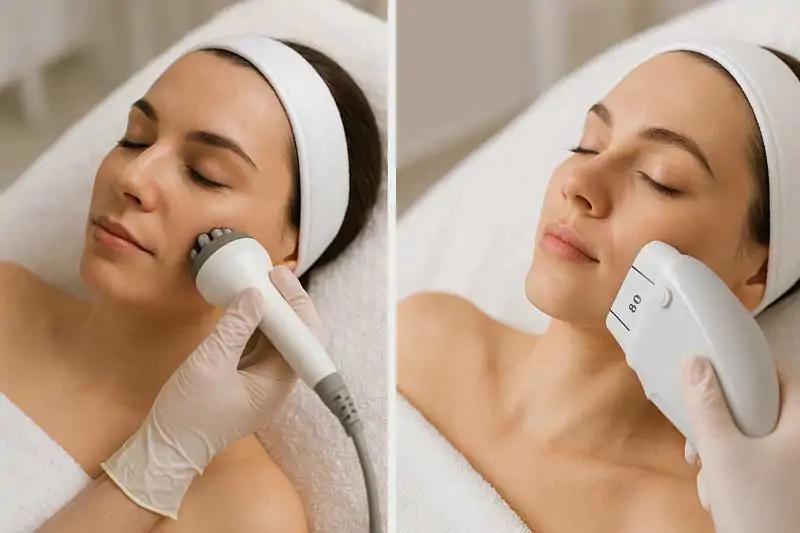
RF therapy gently heats dermal layers. This stimulates new collagen production. It improves overall skin elasticity. HIFU therapy uses focused ultrasound waves. It reaches much deeper foundational layers. This provides a significant lifting effect.
Both are popular non-invasive choices. They avoid the downtime of surgery. Results develop over time. Collagen remodeling is a gradual process. Patient satisfaction rates are high for both methods.
We delve into each technology. We compare their mechanisms and outcomes. Discover the treatment that best aligns with your needs. This guide helps you make an informed decision.
Let’s explore the science together.
Understanding RF Treatment
Radiofrequency (RF) skin tightening uses electromagnetic energy. It delivers controlled heat to the skin’s deeper layers. This thermal energy stimulates a natural healing response. It triggers the production of new collagen and elastin. Collagen provides the skin with its structure and firmness. Elastin gives skin its flexibility.
How RF Works
- Energy Delivery: A handheld device emits RF waves. These waves safely penetrate the skin’s surface.
- Dermal Heating: RF energy heats the dermis to a temperature of 40-45°C. This targets existing collagen fibers.
- Collagen Contraction: Heat causes immediate collagen fiber contraction. This provides an instant tightening effect.
- New Collagen Synthesis: The controlled injury stimulates neocollagenesis. This is the production of fresh collagen.
- Improved Elasticity: Over weeks, new fibers mature and tighten. This leads to smoother, firmer skin.
Benefits of RF Treatment
RF treatments offer versatile skin rejuvenation. They are effective for mild to moderate laxity. Many people choose RF for fine lines. It improves overall skin texture and tone.
- Non-Invasive: No incisions or needles are involved.
- Minimal Downtime: Patients can resume activities quickly.
- Versatility: Suitable for face, neck, and body areas. This includes the abdomen and thighs.
- Gradual, Natural Results: Improvements appear over time.
- Comfortable: The procedure typically feels warm and relaxing.
RF Statistics and Effectiveness
Clinical studies support RF treatment efficacy. Research shows significant improvement in skin appearance.
- A study found 43% of patients had excellent or very good improvement. This results in an over 50% improvement in skin laxity.
- An additional 18% showed good improvement (25-50%).
- For cheeks, 42% saw significant improvement (51-75%). Another 17% noted excellent improvement (76-100%) .
- Jowl lines showed significant improvement (51-75%) in 44% of patients.
- A 2018 study reported improved wrinkles in 70 women after three sessions.
- Another 2017 study showed 90% of women reduced facial fat after 5 weeks.
RF Comfort and Downtime
RF treatments are generally well-tolerated. Patients typically experience mild warmth. Some may feel slight discomfort. There is minimal to no downtime. Mild redness might occur for a few hours. Multiple sessions are usually needed for optimal results. These are often spaced a week apart. Results are seen over several months.
Understanding HIFU Treatment
High-Intensity Focused Ultrasound (HIFU) utilizes concentrated sound waves. It penetrates deep into the skin’s foundational layers. This includes the Superficial Musculo-Aponeurotic System (SMAS). The SMAS layer is targeted in surgical facelifts. HIFU bypasses the skin surface entirely. This ensures no damage to the outer layer.
How HIFU Works
- Focused Ultrasound Energy: HIFU devices emit focused ultrasound waves. These target specific depths below the skin.
- Deep Penetration: Energy reaches the dermis and SMAS layer (up to 4.5mm).
- Thermal Coagulation Points: Focused energy creates precise heat points. This causes controlled micro-injuries.
- Collagen Remodeling: These injuries trigger the body’s healing response. It stimulates the production of new collagen and elastin.
- Lifting and Tightening: Collagen strengthens and reorganizes over time. This leads to a gradual lifting and firming effect.
Benefits of HIFU Treatment
HIFU is renowned for its lifting and contouring abilities. It offers a non-surgical alternative to a facelift.
- Deep Lifting: Targets the SMAS layer for significant lift.
- Non-Invasive: No surgery, injections, or downtime required.
- Precise Targeting: Ultrasound energy focuses exactly where needed. This allows for tailored results.
- Long-Lasting Results: Effects can last up to 1-2 years.
- Natural-Looking: Stimulates body’s own collagen. This ensures subtle improvements.
HIFU Statistics and Effectiveness
HIFU facials show promising results in studies. Many reports confirm their effectiveness.
- A 2015 study found HIFU improved skin elasticity in 93% of participants. This was after 90 days.
- A 2020 study noted measurable collagen fiber thickening. It improved skin density within 6 months.
- Research from 2016 reported an 80% patient satisfaction rate for jawline tightening.
- An older study found skin elasticity significantly improved after 12 weeks.
- Another study reported 80% improvement in facial and neck skin. Patient satisfaction was 78%.
- The American Board of Cosmetic Surgery states positive results in 2-3 months. Good skincare can maintain these for up to 1 year.
- In one study, 94% of subjects showed clinical improvement.
HIFU Comfort and Downtime
HIFU treatment may cause a prickling sensation. Some feel deep heat pulses. Discomfort levels are generally well-tolerated. Typically, there is no downtime. Results develop gradually over 8 to 12 weeks. They peak as collagen regenerates. Maintenance treatments might be recommended.
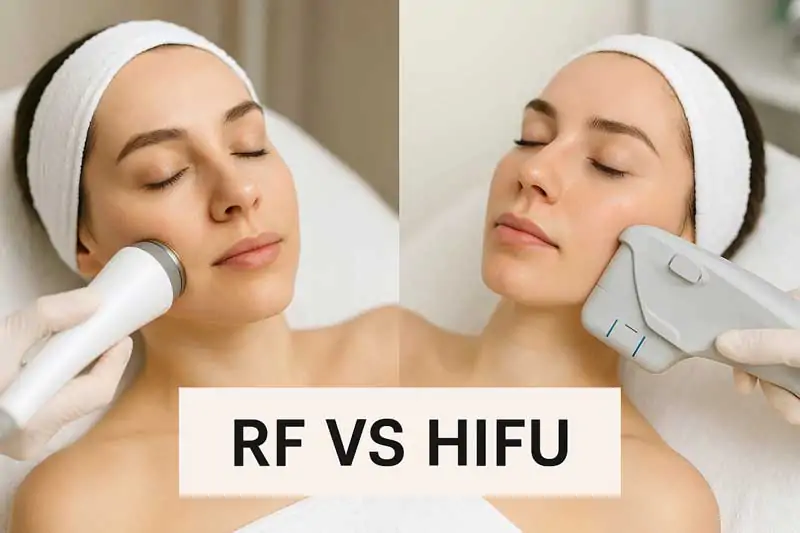
RF vs. HIFU: A Detailed Comparison
Both RF and HIFU stimulate collagen. They both tighten and rejuvenate skin. However, their methods and targeted effects differ significantly. Choosing depends on your specific concerns.
Target Depth
- RF: Targets the dermis (1-3 mm deep). It focuses on surface-level firming and smoothing.
- HIFU: Reaches deeper layers, including SMAS (up to 4.5 mm). It provides a more profound lifting and sculpting effect.
Energy Type
- RF: Uses electrical energy (radiofrequency waves). It heats tissue through resistance.
- HIFU: Uses acoustic energy (focused ultrasound waves). It creates thermal coagulation points.
Results and Longevity
- RF: Offers instant tightening due to collagen contraction. Ongoing improvement occurs over weeks. Results may last several months. Multiple sessions are common.
- HIFU: Results build gradually over 6-12 weeks. Full effects are visible after 3-6 months. Effects can last up to 1-2 years. Fewer sessions are usually needed.
Ideal Candidates
- Choose RF if: You have fine lines, dullness, or mild skin laxity. You seek improved texture and tone. It is ideal for an instant glow and comfortable treatment.
- Choose HIFU if: You desire a lifting effect and improved contour. You want visible jawline definition or a brow lift. It addresses more significant skin laxity.
- Combination: Many experts suggest combining both. This provides a full-spectrum anti-aging strategy. RF for surface firming, HIFU for deep lifting.
Expert Insights on Non-Surgical Rejuvenation
“Both RF and HIFU are powerful non-surgical solutions. If you’re seeking lift, definition, and long-term collagen rebuilding, HIFU often wins. RF remains great for surface texture and glow. HIFU delivers structural rejuvenation that lasts months.” – The Lux Skins® Experts.
“From a clinical standpoint, HIFU is an excellent option for patients. It aims for non-surgical skin lifting and tightening. It provides significant improvement in firmness, definition, and rejuvenation. All this occurs without incisions or major risks.” – The R Clinic.
These expert opinions highlight their distinct strengths. A personalized consultation is always best. This helps determine the right path for you.
Choosing Your Ideal Treatment in Bali
Deciding between RF and HIFU is a personal choice. It depends on your aesthetic goals. Consider your skin condition and desired outcomes. For those considering an RF treatment Bali, Bali Sudirman Medical Centre offers state-of-the-art options. We provide expert assessments. Our team helps you navigate these choices. Bali Sudirman Medical Centre offers advanced technology. This ensures safe and effective treatments.
Whether you seek subtle tightening or a more pronounced lift, we can guide you. Our specialists understand the nuances. They combine science with personalized care. Achieving your desired youthful appearance is our priority. We focus on natural-looking, lasting results.
Frequently Asked Questions (FAQ)
Q: Is RF or HIFU better for skin tightening?
Frequently Asked Questions (FAQ)
Q: Is RF or HIFU better for skin tightening?
A: HIFU reaches deeper layers for lifting. RF works closer to the surface for firming and smoothing. Combining them can yield the best results.
Q: How soon will I see results from these treatments?
A: RF often gives instant tightening. Gradual improvement follows over weeks. HIFU results build slowly, peaking around 8-12 weeks. This is as collagen regenerates.
Q: Can RF and HIFU be used together?
A: Yes, combining both is often recommended. It offers comprehensive anti-aging benefits. RF treats surface concerns. HIFU targets deeper structural lifting.
Q: What do these treatments feel like?
A: RF feels warm, like a facial massage. HIFU produces short bursts of deeper heat. It can feel prickly or tingling. Discomfort is generally mild.
Q: How long do the results last?
A: RF results can last for several months. HIFU results are typically longer-lasting. They can endure for up to 1-2 years. Regular maintenance sessions are advised.
Q: Are there any side effects?
A: Both are generally safe procedures. Mild redness and swelling are possible. These usually subside quickly. Choosing a skilled practitioner is crucial.
Your Path to Rejuvenation Starts Here
Ready to discover the ideal treatment for your skin? Our expert team is ready to assist you. We offer personalized consultations. Let us help you achieve your aesthetic goals.
Explore our full range of aesthetic services:
Bali Sudirman Medical Centre Service Page
Book your consultation today:
Contact us for more information. We are here to help.