A missing tooth is easy to ignore until you get the quote to fix it. In Australia, one implant with its crown is a big expense, and many people stay with the gap for years because of it. The Jakarta Post reported that implants in Bali typically cost around a quarter of Australian prices, which is why implants are one of the most common reasons Australians contact us.
What most comparison pages skip is that an implant is not a one-visit treatment. Done properly, it usually needs two trips to Bali. This article explains why, what each trip involves, which implant brands we use, and how to plan it around your holidays.
How a dental implant works
An implant replaces the root of a missing tooth. It has three parts:
- The implant (post). A small titanium screw placed in the jawbone. Over the following months, the bone grows around it and locks it in place.
- The abutment. A connector that sits on top of the implant and holds the crown.
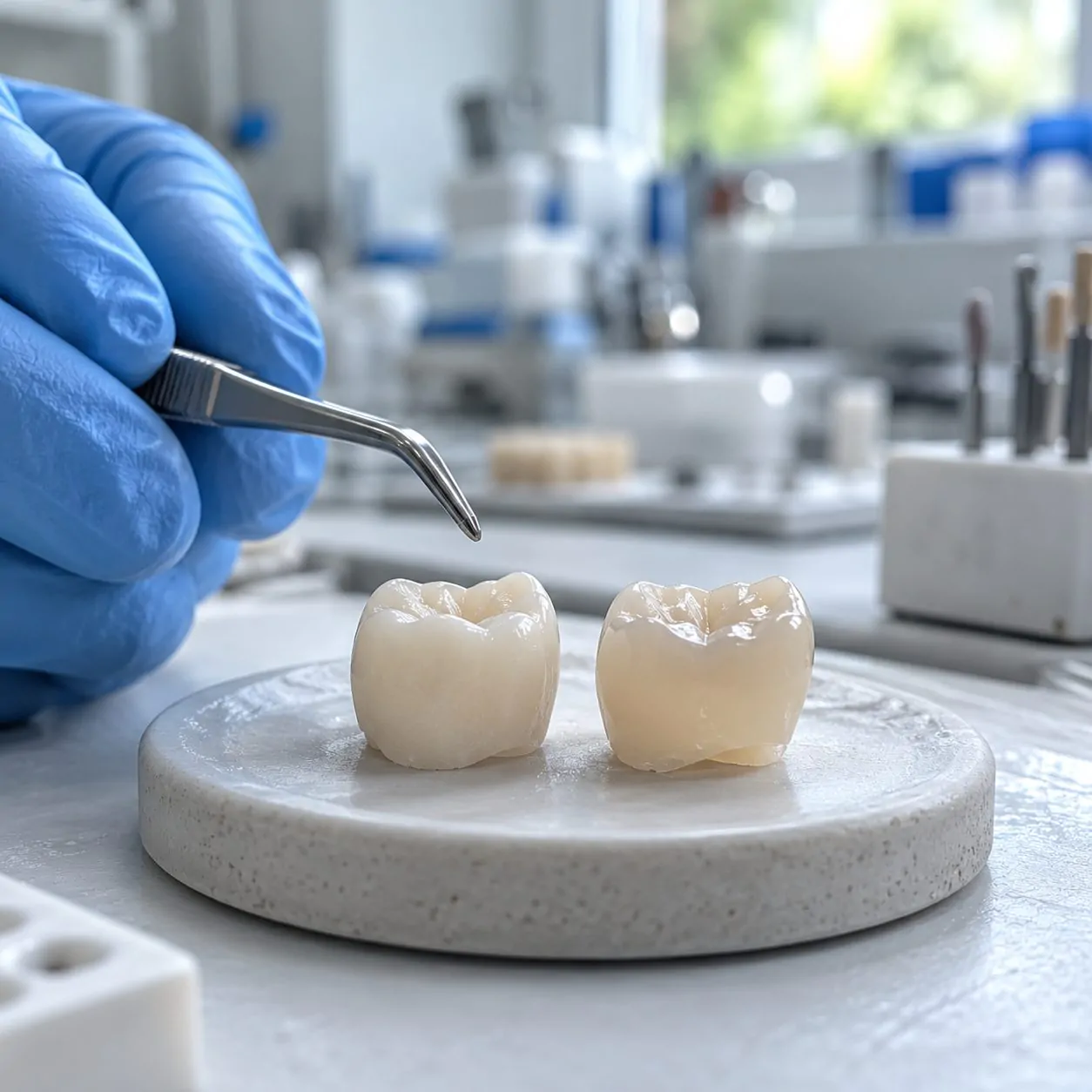
- The crown. The visible tooth, usually zirconia or porcelain, made to match your other teeth.
Because the implant sits in bone, it does not lean on neighbouring teeth for support, unlike a dental bridge. That is the main reason many people choose an implant over a bridge for a single missing tooth.
What affects the cost of an implant
We give you a written quote after your examination and X-ray. The main things that shape it are:
- Implant brand. Straumann costs more than Osstem.
- Crown material. Zirconia or porcelain fused to metal.
- Bone graft. Only needed if there is not enough bone to hold the implant.
- Extraction. If the old tooth is still there, it comes out first.
Watch out for quotes that list only the implant. A price that looks very low often leaves out the abutment, the crown, the X-rays or the bone graft. Your BSMC plan lists each part separately, so you can compare like with like.
Straumann or Osstem: which implant brand?
We use two implant systems at BSMC. Both are established international brands, and your plan names the one going in before you agree to anything.
| Straumann | Osstem | |
| Origin | Switzerland | South Korea |
| Known for | Premium surfaces and decades of research | One of the most widely used systems in Asia |
| Availability in Australia | Widely available, so parts are easy to find at home | Available, though less common than Straumann |
| Relative price | Higher | Lower |
If you think an Australian dentist may need to work on the implant later (for example, replacing the crown in ten years), Straumann is the simpler choice because parts are easy to get there. If budget matters more, Osstem is a solid option. Either way, keep the implant brand and size details from your records.
Why most implant patients plan two trips
The implant needs time to fuse with your jawbone before it can take the force of chewing. That healing usually takes three to six months. Rushing it is one of the main reasons implants fail.
Trip 1: placing the implant (about 3 to 5 days)
- Consultation, examination and X-rays, including a 3D scan if needed
- Removal of the old tooth, if it is still there
- Bone graft, if there is not enough bone
- Implant placement under local anaesthetic
- A check-up a few days later before you fly
You go home with a gap or a temporary tooth while the implant heals.
Between trips: healing at home (3 to 6 months)
Most people go back to work within a day or two. You eat softer food on that side for the first couple of weeks and keep the area very clean. You can message us on WhatsApp if you have questions.
Trip 2: fitting the tooth (about 5 to 7 days)
- Check that the implant has fused with the bone
- Abutment placed and the area scanned
- The lab makes your zirconia crown for the implant
- Crown fitted and your bite adjusted
Many patients time the second trip with a school holiday or a long weekend. Some bring the family and make it a proper holiday.
In some cases, with good bone and a front tooth, a temporary tooth can be fitted on the same day the implant goes in. That is decided case by case after your scan.
Bone grafts and sinus lifts, explained simply
After a tooth is lost, the jawbone in that spot slowly shrinks. If too much has gone, there is not enough bone to hold an implant securely.
A bone graft adds bone material to build up the area. Small grafts are often done at the same appointment as the implant. Larger grafts may need to heal first, which can add time to your plan.
A sinus lift is a specific graft for upper back teeth, where the sinus sits close to the jaw. It raises the sinus floor to make room for the implant. Sinus lifts need extra healing time, and your dentist will tell you when it is safe to fly afterwards.
We can usually tell from your X-ray whether you are likely to need either, which is one more reason to send us a recent X-ray before booking flights.
Am I a good candidate for an implant?
Most healthy adults are. These things help:
- Healthy gums, or gum problems treated first
- Enough jawbone, or willingness to have a graft
- Not smoking, or stopping around the time of surgery
- Well-controlled medical conditions, such as diabetes
Tell your dentist about any medicines you take, especially blood thinners or bone medication. These do not always rule out an implant, but they change how it is planned.
Missing several teeth, or all of them? A full-arch option such as All-on-4 may make more sense than individual implants. We explain the options in our All-on-4 guide.
Frequently asked questions
Can I get a dental implant in one trip?
Usually not. The implant needs three to six months to fuse with the bone before the final crown is fitted. A small number of cases allow a temporary tooth on the same day, but the final crown still comes later.
Does getting an implant hurt?
The area is numbed with local anaesthetic, so most people feel pressure rather than pain. Expect some soreness and swelling for a few days afterwards, usually managed with standard pain relief.
How long do implants last?
With good cleaning and regular check-ups, implants often last for decades. The crown on top may need replacing after 10 to 15 years.
When can I fly after implant surgery?
Most patients can fly a day or two after a straightforward implant. After a sinus lift, you may need to wait longer. See our aftercare guide for flying home.
Is it cheaper to get an implant in Bali?
For most patients, yes, by a wide margin, even after flights. Ask for a written quote so you can compare it with your Australian quote line by line.
Get your implant plan and trip dates
Send us your OPG X-ray (a full mouth X-ray from your Australian dentist) on WhatsApp, or just a photo of the gap. Your dentist will reply with whether you are likely to need a bone graft, which brand we suggest, a written quote and how many days to plan for each trip.
Message BSMC on WhatsApp or book a dental consultation. New to the idea of treatment overseas? Start with our guide to dental work in Bali, or read more on our dental implant page.
Bali Sudirman Medical Centre, Jl. PB Sudirman No. 2B, Dauh Puri Klod, Denpasar 80114. Open 10am to 8pm.