If you have priced veneers in Australia, you already know why you are reading this. Most people want six to ten of them, and back home that adds up fast. Veneers in Bali usually cost a fraction of that, which is why they are one of the most common reasons Australians visit our clinic.
Price matters, but it is not the biggest decision you will make. The material, the number of teeth, the shade and the dentist matter more, because veneers are permanent and you will see them in the mirror every day for the next 10 to 15 years.
Here is what we tell patients at their first consultation.
What veneers actually are
A veneer is a thin shell bonded to the front of a tooth. It changes the colour, shape and length of the tooth, and can close small gaps or hide chips. With porcelain and zirconia veneers, the dentist removes a thin layer of enamel first so the veneer sits flush. That step cannot be undone, so the planning has to be right.
A common mix-up: people sometimes ask whether porcelain is “better than veneers”. Porcelain is a material, and a veneer is the shell. We explain the difference in this short article.
Porcelain, zirconia or composite?
| Porcelain | Zirconia | Composite | |
| Look | Most natural, light passes through like enamel | Very natural, slightly more opaque | Good, but can dull over time |
| Strength | Strong | Very strong, good for grinders | Moderate, can chip |
| Stain resistance | Excellent | Excellent | Picks up coffee and wine stains |
| Typical lifespan | 10 to 15 years | 10 to 15 years | 4 to 8 years |
| Made in | Dental lab | Dental lab | In the chair, same day |
| Days in Bali | 5 to 7 | 5 to 7 | 1 to 2 |
| Relative price | Mid | Slightly higher | Lowest |
Porcelain is the one most people picture. It reflects light like natural enamel and holds its colour well. It suits most front-teeth cases. See our porcelain veneer page.
Zirconia is tougher. We often suggest it for people who grind their teeth, have a heavy bite, or want veneers on teeth that take more force. Details on our zirconia veneer page.
Composite is resin, shaped directly on the tooth in one sitting. It costs much less and usually needs little or no enamel removal. The trade-off is lifespan and staining. It is a sensible choice for one chipped tooth, or for someone who wants to try a new shape before committing.
What affects the price of veneers
We give every patient a written quote after examining their teeth, because the final figure depends on a few things:
- Number of teeth. Most people need more than they expect. If you smile widely, six veneers can leave darker teeth showing at the sides, so eight or ten is common.
- Material. Zirconia costs a little more than porcelain. Composite costs the least.
- Preparation work. Old fillings, decay or gum treatment need to be sorted first.
- Temporaries. You will wear temporary veneers while the lab makes your final set.
Your written plan lists each item separately, so you can see exactly where your money goes and compare clinics fairly.
Your veneer timeline, day by day
Porcelain and zirconia veneers usually take 5 to 7 days. Here is a typical week:
| Day | What happens | Time in the chair |
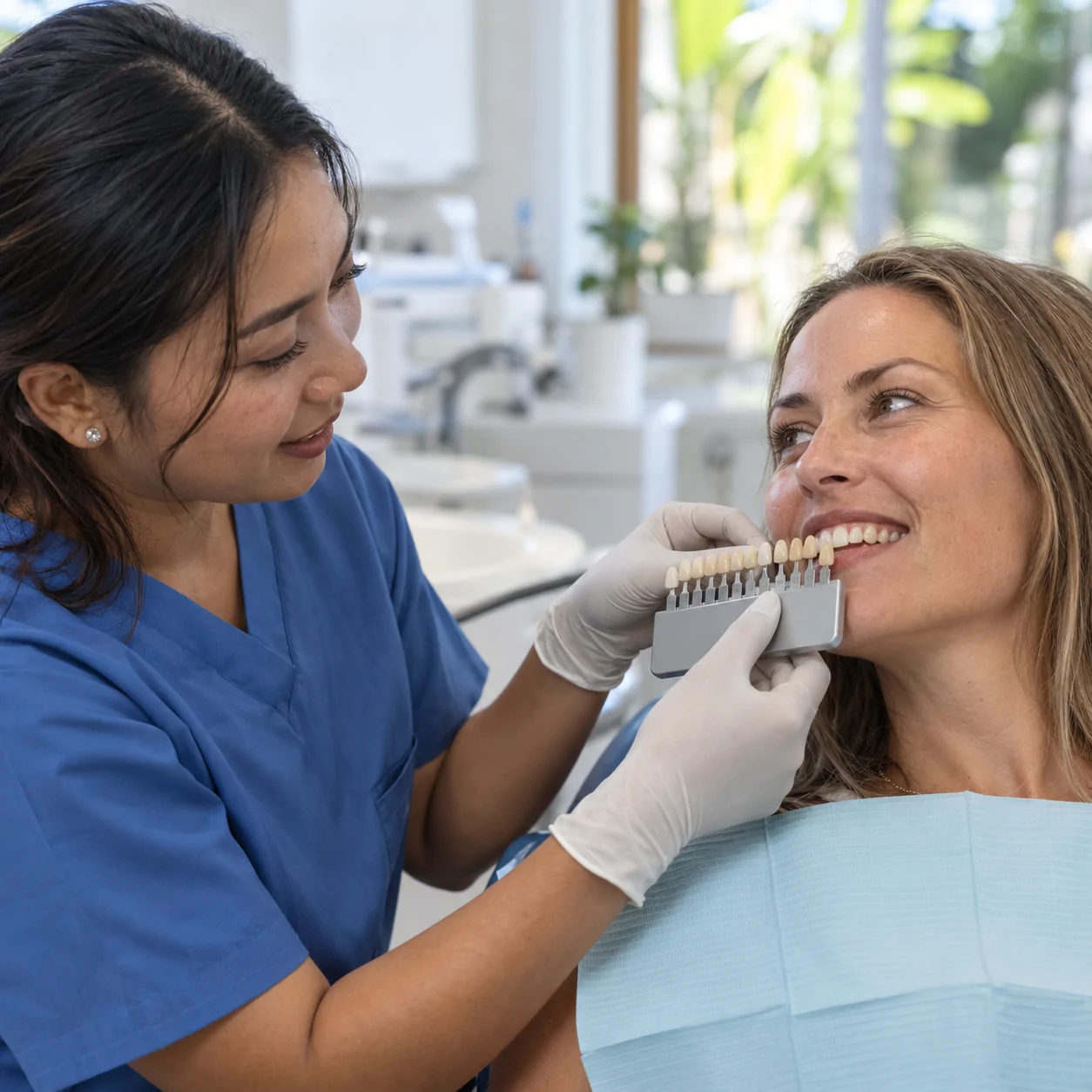
| Day 1 | Consultation, X-rays, photos, shade and shape discussion | About 1 hour |
| Day 2 | Teeth prepared, scans or impressions taken, temporary veneers fitted | 2 to 4 hours |
| Days 3 to 4 | The lab makes your veneers. You are free: beach, pool, a facial. | None |
| Day 5 or 6 | Try-in. You check the look in the mirror before anything is bonded. Then the final fit. | 2 to 3 hours |
| Day 6 or 7 | Review of your bite and gums, small adjustments if needed | About 30 minutes |
The try-in day matters more than most people realise. This is your chance to say “a bit shorter” or “a touch less white” before the veneers are permanently bonded. Speak up. A good dentist wants that feedback.
Plan at least one buffer day before your flight in case the lab needs to make a small change.
Who should not get veneers (yet)
Veneers are not right for everyone, and part of a good consultation is hearing “not yet”. Your dentist may suggest a different first step if you have:
- Gum disease or active decay. These need treating first, or the veneers will not last.
- Heavy grinding. Grinding can crack porcelain. Zirconia plus a custom night guard is often the safer path.
- Very crooked teeth. Straightening with clear aligners first can mean fewer veneers and less enamel removed.
- Mostly a colour concern. If your teeth are healthy and well shaped but yellow, try professional whitening first. It might be all you need.
How to keep veneers looking natural
The “too white, too big” look is the one people worry about, and it is avoidable.
Choose a shade that suits your skin and eyes, not the whitest one on the guide. Very bright veneers can look flat, especially next to natural bottom teeth.
Whiten first if you are only doing the top teeth. Veneers do not change colour after they are made. If you want your other teeth lighter, whiten them before your shade is chosen.
Keep some character. Natural teeth have small differences in length and edge shape. Perfectly identical rectangles are what make veneers look fake.
Look after them like teeth. Brush twice a day, floss, and see a dentist every six months. Avoid biting ice, pens or bottle caps. If you grind, wear your night guard.
What patients say
“I got 6 beautiful front veneers done. They look so natural and I cannot stop smiling. The whole process was smooth.”
Ellie, verified review on Dental Departures
BSMC holds a 4.83 rating from more than 1,100 verified reviews on Dental Departures. Many of those patients came from Australia for veneers.
Thinking of pairing veneers with a skin treatment while the lab works? We cover that in our guide to planning a smile makeover in one trip. For the bigger picture on safety and planning, read our guide to dental work in Bali for Australians.
Frequently asked questions
How many veneers do I need?
Most people who want a full smile makeover choose eight to ten on the top teeth. Your dentist will look at how wide you smile and suggest a number that avoids darker teeth showing at the sides.
How long do veneers take in Bali?
Porcelain and zirconia veneers take 5 to 7 days, with two to three main appointments. Composite veneers can be done in one or two days.
Are veneers in Bali safe?
That depends on the clinic and the dentist rather than the country. Ask about the dentist’s registration, the lab that makes the veneers, the materials used, and what happens if you need an adjustment after you go home.
Do veneers ruin your teeth?
No, but porcelain and zirconia veneers do need a thin layer of enamel removed, so those teeth will always need to be covered. That is why choosing the right number and shape matters so much.
Can an Australian dentist look after my Bali veneers?
Yes. Bring your records home and share them with your regular dentist. They can clean around veneers and check them at your usual visits.
See your new smile before you commit
Send us a smiling photo and a close-up of your teeth on WhatsApp. Tell us what bothers you about your smile and when you will be in Bali. We will reply with the number of veneers we suggest, the material that suits you and a written quote.
Message BSMC on WhatsApp or book a veneer consultation.
Bali Sudirman Medical Centre, Jl. PB Sudirman No. 2B, Dauh Puri Klod, Denpasar 80114. Open 10am to 8pm.