Good oral health begins with consistent daily hygiene habits. Many travelers seek the best dental treatment Bali provides today. Proper flossing techniques help remove stubborn plaque and food particles.
Finding the best dental floss treatment in Bali ensures lasting dental health. Daily cleaning routines prevent expensive and painful future dental surgeries. Bali Sudirman Medical Centre offers comprehensive care for your beautiful smile.
The Invisible Battle: Why Brushing Is Never Enough
Most people brush their teeth twice every single day. They believe this is enough to stay healthy. However, your toothbrush has physical limits. It only cleans about sixty percent of your teeth. The other forty percent remains hidden between them. These areas are called interproximal surfaces. They are ideal hiding places for bacteria. Only dental floss can effectively reach these narrow gaps.
Think of your teeth as five-sided blocks. Brushing only cleans three of those sides. The remaining two sides touch the neighboring teeth. Food particles get trapped in these tight contacts. Bacteria feed on these particles and produce acid. This acid slowly dissolves your protective tooth enamel. Over time, this leads to hidden cavities. You might not feel them until they are deep. This is why flossing is absolutely mandatory.
Understanding the Science of Biofilm and Tartar
Dental plaque is actually a complex bacterial biofilm. It is a sticky and colorless layer of germs. This film forms on your teeth every hour. It lives on sugars and starches from your food. If you do not remove it, it hardens quickly. Within 48 hours, plaque can turn into tartar. Tartar is also known as dental calculus. It is as hard as a rock.
You cannot remove tartar with a toothbrush at home. Even the strongest floss will not move it. Only a professional dental scaler can remove this buildup. Tartar creates a rough surface that attracts more plaque. It irritates the gums and causes chronic inflammation. This is the starting point for most gum diseases. Regular flossing prevents this hardening process from starting. It keeps your mouth healthy.
Critical Statistics: The State of Global Oral Health
Data from health organizations shows a major problem. Many adults today suffer from preventable dental issues. These statistics highlight the importance of interdental cleaning.
- The CDC states that 47.2% of adults over 30 have periodontitis.
- For seniors aged 65 and older, the rate increases to 70.1%.
- Flossing correctly can reduce the risk by up to 30%.
- Surveys show 32% of people never floss their teeth.
- Only 30% of the population flosses once every day.
- Gum disease is linked to a 20% increase in heart disease risk.
- Untreated gum disease can double the risk of Type 2 diabetes.
These numbers are a wake-up call for everyone. Most dental problems are silent until they are severe. Prevention is much cheaper than any medical cure. A simple piece of string can save your life. It protects your heart and your overall metabolism.
As expert organizations emphasize the value of flossing, it’s important to learn proper technique. Here are clear steps for effective flossing:
“Flossing is a crucial part of your oral hygiene routine. It removes plaque from areas where a toothbrush cannot reach. This helps prevent gum disease and cavities.“
— The American Dental Association (ADA)
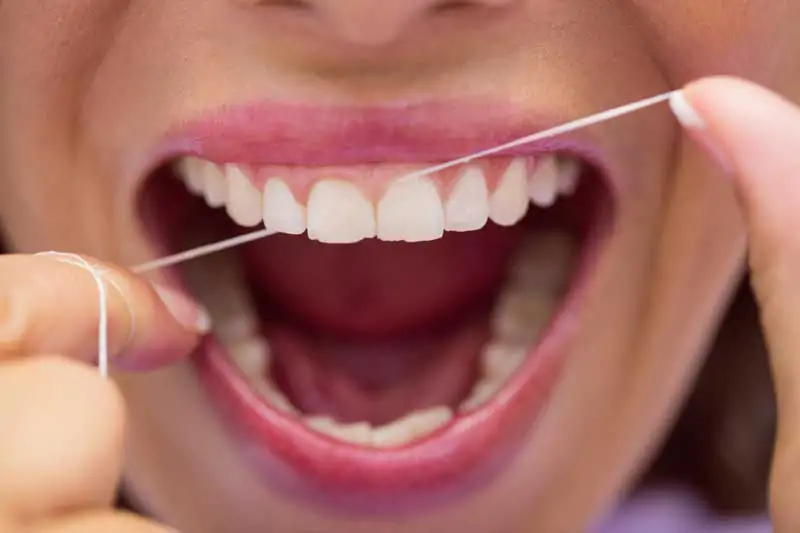
Technique is more important than the brand of floss. Many people floss, but do it the wrong way. They often hurt their gums or miss spots. Follow these professional steps for the best results. This routine takes only two minutes a day.
1. The Proper Length
Break off about 18 inches of high-quality floss. Wrap the ends around your middle fingers. This keeps the floss stable and secure. Leave about two inches for the actual cleaning. Hold the string tightly with your thumbs and index fingers.
2. The Gentle Entry
Guide the floss between two teeth very slowly. Use a gentle back-and-forth sawing motion. Do not snap the floss into your gums. Snapping can cause bleeding or tissue damage. Be very careful with crowded teeth.
3. The “C” Shape Technique
When the floss reaches the gum line, curve it. Create a “C” shape around the side of one tooth. Slide it into the space between the tooth and gum. This is the most critical part of the process. This area is where most pathogenic bacteria grow.
4. Vertical Scraping Motion
Hold the floss tightly against the tooth surface. Move it up and down in a vertical motion. This friction physically scrapes away the bacterial biofilm. Do not use a sawing motion under the gum. Repeat this for the other tooth in the same gap.
5. Advancing the String
As you move to the next gap, shift the floss. Use a clean section of string every time. This prevents bacteria from spreading across your mouth. Work systematically from the top left to the bottom right. Don’t forget the back side of the last molars.
Comparing Your Tools: String vs. Tape vs. Water
There are multiple options for interdental cleaning. The most effective method is the one that fits your needs. Each presents unique advantages depending on oral conditions. Consultation with your dentist will help determine the most appropriate choice.
Traditional String Floss
String floss is the most common and affordable tool. It comes in waxed and unwaxed versions. Waxed floss slides more easily through very tight gaps. It also resists shredding on sharp tooth edges. Unwaxed floss provides more grip for plaque removal. It is very effective for most healthy mouths.
Dental Tape
Dental tape is wider and flatter than standard floss. It is ideal for people with large gaps. It feels much softer on sensitive gum tissue. Many people find it easier to handle and grip. It covers more surface area with each stroke. This can make flossing feel faster and easier.
Water Flossers
Water flossers use a high-pressure stream of water. They are excellent for people with dental braces. They are also perfect for cleaning under bridges. While helpful, they lack the physical scraping of string. Many experts suggest using both for maximum protection. They are a great supplement to traditional flossing.
“Interdental cleaning is essential because a toothbrush can’t reach between the teeth. The most important thing is to find a method that works for you.”
— Dr. Nigel Carter, Chief Executive of the Oral Health Foundation
The Systemic Link: Mouth Health and Body Health
Your mouth is the primary gateway to your body. Oral health affects your heart, lungs, and blood. Chronic inflammation in the mouth causes systemic issues. This is because bacteria can enter your bloodstream. They travel through tiny leaks in inflamed gums.
Heart disease has a very strong link to gums. Oral bacteria can contribute to the formation of clogged arteries. This increases the risk of stroke or heart attack. Taking care of your teeth protects your heart health. It is a simple habit with huge long-term rewards.
Diabetes and gum disease have a two-way connection. High blood sugar makes gum infections much worse. Conversely, gum disease makes blood sugar hard to manage. Flossing helps keep your blood sugar more stable. It is an essential habit for all diabetic patients.
Expectant mothers must be very careful with hygiene. Hormonal changes make gums swell and bleed easily. Severe gum disease is linked to premature births. It also increases the risk of low birth weight. Healthy flossing protects both the mother and the baby. It is a vital part of pregnancy care.
Common Mistakes to Avoid While Flossing
Even daily flossers can make simple mistakes. These errors reduce the effectiveness of the routine. They can even cause minor harm to your mouth. Awareness helps you improve your technique today.
- Stopping because of blood: Bleeding is a sign of inflammation.
- Only sawing back and forth: You must scrape up and down.
- Missing the gum line: You must go slightly below the gum.
- Using too little floss: You need enough to use clean sections.
- Flossing too fast: Spend at least two minutes on the process.
World-Class Dental Care in the Heart of Bali
Bali is increasingly recognized as a prominent location for dental care. Patients select Bali for its quality and affordability. Searching for dental treatments in Bali leads to qualified experts. Patients can access professional care while visiting the region. Standards of treatment in Bali are comparable to those in other leading regions.
Modern clinics in Bali utilize advanced technology such as digital X-rays and 3D dental imaging. Facilities follow sterilization protocols and international medical standards. Many practitioners have received training internationally and combine technical expertise with attentive service. This fosters a comfortable and reassuring care environment for patients.
Professional cleaning is essential for all holiday travelers. Finding the best dental floss treatment in Bali ensures dental health. Experts can remove deep tartar that you cannot. They also provide deep scaling for gum disease. This leaves your smile bright and healthy for years.
Excellence at Bali Sudirman Medical Centre
Bali Sudirman Medical Centre offers premium services for every patient. They specialize in preventative, aesthetic, and restorative dentistry. The facility is modern, clean, and very welcoming. They understand the specific needs of international visitors. Their team focuses on long-term health and beautiful results.
Communication is easy with their English-speaking staff. They explain every procedure and cost very clearly. This builds trust and makes patients feel safe. Whether you need a check-up or implants, they help. They prioritize your comfort during every single dental visit. This is the standard of excellence in Bali.
The clinic is convenient for all tourists. You can book an appointment online with ease. They offer competitive prices for high-end medical services. Combining a holiday with health care is very smart. Your oral health is their primary mission every day.
Frequently Asked Questions (FAQ)
1. Why do my gums bleed during flossing?
Gums bleed because of plaque and bacterial buildup. This causes the tissue to become very inflamed. If you floss daily, bleeding stops in a week. If it continues, you should see a dentist.
2. Is it better to floss at night?
Yes, flossing at night is best. It removes food for hours before you sleep. This stops bacteria from damaging teeth while you sleep. However, any time of day is still beneficial.
3. Can children floss their own teeth?
Children should start flossing when two teeth touch. Parents should help them until age ten. This builds a healthy habit for their entire life. Use soft flossers designed for smaller hands.
4. Does flossing create gaps between teeth?
No, flossing does not create permanent gaps. It removes the swelling that hides existing spaces. It actually protects the bone that holds teeth. Healthy gums always look and feel much tighter.
5. Can I floss with a dental bridge?
Yes, you must clean under your dental bridge. Use a floss threader to get under the bridge. Alternatively, use a water flosser for this area. Keeping bridges clean prevents decay in neighboring teeth.
Take Charge of Your Oral Health Today
Healthy teeth are vital to a long life. Daily flossing is the most effective preventative tool. Combined with professional care, it ensures a perfect smile. Do not wait for pain to take action. Start your new health journey today for a better tomorrow.
Do you have any bleeding gums?
If yes, we recommend a professional consultation at our clinic.
Ready for a Professional Consultation?
Are you looking for the highest quality dental care? Our experts are ready to assist you in Bali. We focus on your comfort and health outcomes. Your smile is our biggest priority every day.
View our full list of dental services: BSMC Dental Services.
Book your professional reservation today: BSMC Appointment Portal.